
Use cases
Transforming Manufacturing
Across Industries
The MaaSAI system demonstrates its versatility and effectiveness across diverse manufacturing sectors, showcasing the adaptability of its Manufacturing as a Service approach. Through five distinct industrial implementations, the system proves its capability to address specific challenges while delivering measurable improvements in efficiency, sustainability, and operational excellence.
These implementations span crucial manufacturing sectors – from precision metal machining to biotech prototyping – each highlighting different aspects of the MaaSAI system’s comprehensive capabilities. The use cases demonstrate how the integration of AI-driven planning, digital twins, and autonomous agents transforms traditional manufacturing processes into flexible, efficient, and sustainable operations.
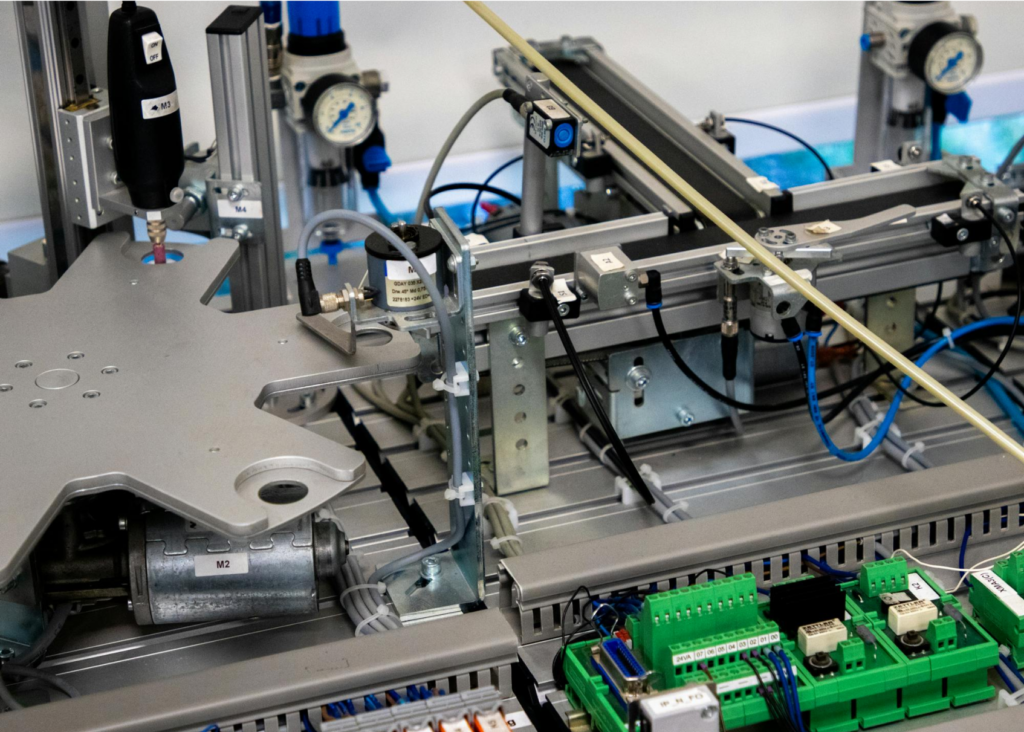

Metal Parts
Manufacturing
as a Service
FACTOR, a metal machining specialist since 1982, faced the complexity of manufacturing precision metal parts requiring tight tolerances.
The challenge laid in efficiently monitoring and optimizing machine performance while maintaining high-quality standards across distributed manufacturing operations.
Context
Factor Ingenieria y Decoletaje SL, founded in 1982 and based in Puçol (Valencia, Spain), focuses its main activity on the machining of metal parts. The biggest challenge of the process is the complexity of the parts to be manufactured, that require tight tolerances. Participation in this, and other ambitious projects, brings the company closer to a more efficient manufacturing.
This use case proposes a MaaS solution for the metal parts manufacturing industry that leverages Industry 4.0 technologies to address the challenges of machine monitoring and optimisation. The proposed solution consists of an autonomous cell that is connected to a manufacturing machine.
The cell is equipped with a variety of sensors, including IoT devices, optical sensors, and haptic sensors. The sensors collect data on the machine’s availability by measuring working time, performance with production cycle measurement, and quality from the result of counting ok produced units versus nok. This data is then used to calculate the machine’s Overall Equipment Effectiveness (OEE). An artificial intelligence (AI) model is then used to analyse the OEE data and provide suggestions for improvement. The AI model can be trained on historical data from a variety of manufacturing machines to identify common patterns and trends. This allows the model to provide more accurate and personalised suggestions.
Before
Before MaaSAI: The MaaS Consumer or Mother Factory, is a well-established manufacturing company with a sophisticated ERP system and MES system. It has a wide range of manufacturing machines, which can be CNC machines, 3D printers, metal injection molding machines or a mix of them. The Mother Factory is facing several challenges, including high costs of maintaining and optimising manufacturing machines, difficulty in scaling production up or down to meet fluctuating demand, limited access to new manufacturing technologies or difficulty finding qualified suppliers and providers that reach the high standards required.
Maas Producer, or the Daughter Factory, is a smaller, newer manufacturing company. The daughter factory only has a few machines, which are capable of performing a limited range of tasks, and with the potential to support the high standard required from a
few customers only. It is facing several challenges, including: lack of visibility into the performance of manufacturing machines, difficulty in optimising manufacturing processes, inability to scale production up or down to meet changing demand, and reduced knowledge of the quality standards required by customers.
After
After MaaSAI: The implementation of the MaaSAI System will involve four phases.
In Phase 1, an autonomous cell will be installed in the Mother Factory to monitor manufacturing machines, and in Phase 2, the cell will be replicated in a daughter factory. Then the Maas Consumer Agent (MCA) and the MaaS Provider Agent (MPA) start interacting to schedule and plan the manufacturing service in a secured and private manner.
Phase 3 involves upgrading the cell as the daughter factory grows, and Phase 4 will expand the MaaS network to new Mother Factories. This phased approach of the MaaSAI System offers benefits such as reduced risk, increased flexibility, and improved efficiency for manufacturers.
The data collected by the autonomous cell in the Cloud MaaS Marketplace (CMM) will hold commercial value, enabling predictive maintenance, process optimisation, new product development, data-driven decision-making, and data monetisation.
Challenges include standardising manufacturing processes and establishing secure data communication networks. Following this approach, the mother factory will be able to monitor the system with the Control Panels (CP) and the Remote Monitoring and Control (RMC) solutions. The proposed MaaS System can be applied to various metal parts manufacturing processes and has potential applications in automotive, aerospace, medical devices, and consumer electronics.
Although promising, further research and development will be needed for widespread implementation.
Expected improvements
- Operational uptime of machining resources [KPI2] (+5%)
- Integrated energy utilisation in machining processes [KPI3] (-5%)
- Corrective maintenance ratio [KPI4] (-5%)
- Operational efficiency of machining processes [KPI5] (+10%)
- Average time to component/machine failure [KPI9] (+5%)
- Average repair time of machining
equipment [KPI10] (-5%) - Overall equipment effectiveness (OEE) index [KPI11] (+4%)
- Machining efficiency loss ratio [KPI13] (-5%)
- Precision output ratio [KPI15] (+10%)
- Logistics efficiency ratio of the machining cells [KPI16] (-5%).
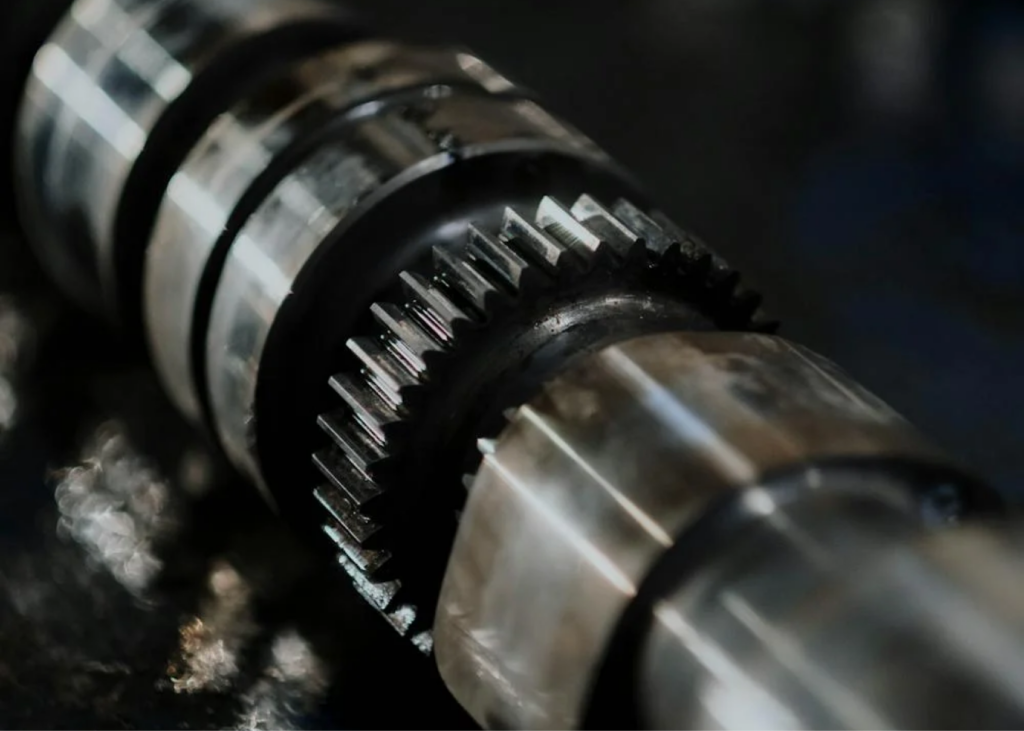

Optimising a Gears
Manufacturing as a Service Production
Gears and mechanical power transmission sector
Tasowheel produces approximately 190,000 gear pieces annually for 150 customers, with each gear requiring specific tolerances and features. The challenge centers on optimizing tool sharing between machines, reducing waiting times (where products remain idle for up to 95% of their lifecycle), and managing a 6-month lead time for raw materials while maintaining an 8-week delivery commitment.
Context
Tasowheel Oy is an SME specialising in manufacturing gears and transmission systems established in 1979. The company employs 135 persons. Tasowheel manufactures its products in two facilities.
The first one is located in Tampere, and it is divided into two shop floors. The first shopfloor is dedicated for gears’ manufacturing. The second shopfloor is dedicated for transmission assembly. The second facility is located in Tikkakoski and it is specialised in manufacturing all other components than gears like bushings, axels, fitting, etc. This pilot will focus on the gears manufacturing shop floor in Tampere. In more detail, and as depicted in the illustration, the process of manufacturing the gears is generally divided into different stages.
This facility produces approx. 1,000 (190,000 pcs) products a year of which around 95% are Manufactured-as-a-Service to ~150 customers. In this regard, Tasowheel provides vast options of materials and designs for manufacturing gears that vary from 10 mm up to 400 mm in diameter. On average, the production of a gear takes approx. 8 weeks. This period depends on several factors, which Tasowheel tries to improve.
Before
Before MaaSAI: The production planning at Tasowheel is a very complex optimisation problem. This complexity is a result of some factors. Firstly, each stage of the 6 stages may include around 7 machines. These machines can vary in their performance and capabilities. The selection of the machines depends on the tolerances and the gear features that are ordered from the customers. These machines share the tools that are used to cut the metal. Therefore, some machines might be on standby waiting for other machines to finish the job that uses the same tools.
This is reflected in the waiting time of the products-in-process in between the stages. In this regard, at peak point, some products remain 95% of their lifecycle in waiting between the stages.
The target is always to produce the same part using the same machines to minimise quality defects. Secondly, as a Manufacturing as a Service, Tasowheel needs to rely on their experience to estimate the needs of their customers. In more details, Tasowheel agrees with their customers to produce a certain number of parts per year. However, each batch can be different in size based on the customer orders. This creates a challenge for Tasowheel to plan the production to guarantee the 8-week lead time for their deliveries. Thirdly, some of the raw materials require 6 months to be delivered to Tasowheel. Thus, the procurement of the raw material involves the estimation of the orders of the customers to reduce any delays in the deliveries.
With these challenges, Tasowheel production planning personnel need to plan the production which includes selecting the machines for each order, allocating the human workers that are needed to set up the machines, and scheduling the hardening processes with the hardening company. The goal of the planning is to maximise the equipment utilisation time.
After
After MaaSAI: The Cloud MaaS Marketplace (CMM) will help the discovery of the services offered by Tasowheel. Once a customer selects Tasowheel, the Maas Consumer Agent (MCA) and the MaaS Provider Agent (MPA) start interacting to schedule and plan the manufacturing service in a secured and private manner. In more details, the Maas Provider Planner (MPP) will create provision plans for the requested service.
These plans then will be shared with the MaaS Consumer Planner (MCP) to verify the validity of these plans. The validation will take into consideration the consumer schedules. Once some of the plans are validated, then these plans will be simulated in the MaaS Supply Chain Simulation (SCS) and the Digital Twins Designer (DTD). The simulation will be presented to the responsible operator to approve the service. once the services are approved.
The Smart Contracts Toolkit (SCT) will manage the contract signatures and then request the Workspace Configurator (MWC) to generate the workspace reconfiguration to host the approved service. With such automation and optimisation, it is expected that Tasowheel will improve its production efficiency and its estimation of the lead time.
Expected improvements
Ratio of effective resource utilisation in production orders [KPI1] (25%)
Gears and mechanical power transmission inventory turnover rate [KPI8] (+20%)
Index of manufacturing process capability [KPI12] (+8%)
Efficiency index of gears and power transmissions manufacturing process [KPI14] (+10%)
Product-specific production efficiency index [KPI17] (+10%)
Productivity index of work units [KPI18] (+10%)
Emissions of greenhouse gases [KPI19] (-5%)
Electric and thermal power usage in machining processes [KPI20] (-8%)
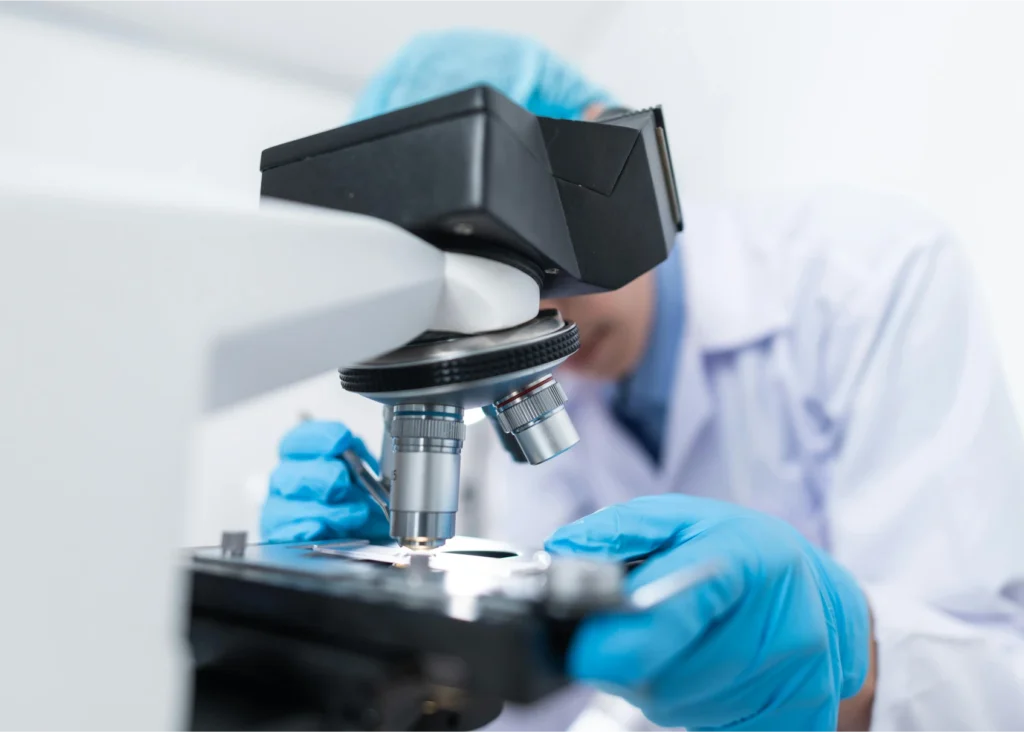

Prototyping and Low-volume Production as a Service
Biomaterials sector
Bio4Dreams needed to bridge the gap between research projects and business implementation. The primary challenge was providing efficient prototyping and low-volume production services while helping startups validate their scientific activities without the burden of sustaining the costs and management of proprietary laboratories.
Context
Bio4Dreams spa is a privately owned incubator certified by the Ministry of Economic Development, born in 2017. It is fully dedicated to the development of very early-stage start-ups and to the promotion of innovation ecosystems. Bio4Dreams acts as a catalyst in the transition from «research project» to «business project», positioning itself as an interface between innovation (academia, research, and institutions), finance (VC, CVC, and BA), and business (tech, biotech, and pharma companies). Bio4Dreams offers its start-up customers different types of services for supporting their prototype development. In particular, in terms of MaaS, it has recently developed 2 service platforms, namely Shared LabsTM and BEEP Factory (BioEngineering Enhanced Prototyping).
Shared Labs: The Shared LabsTM are research laboratories designed, equipped and organised by research function that could be shared between startups for the time required to validate their scientific activities. The Shared LabsTM help those start-ups in need of scientific validation but not capable of sustaining the costs and the management of a proprietary laboratory.
These labs are located in Milano, at MIND – Milano Innovation District, Viale Decumano 41, 20157 Milano and in VILLA GUARDIA, Area Pharma Biotech, Piazza XX Settembre 2, 22079 Villa Guardia (COMO). Beep Factory: The Beep Factory focuses on MaaS prototyping and low-volume production to help the development, reengineering and testing of prototypes before scaling up production. Beep Factory aims to create a hub for a large number of research projects, either coming from academic research, from innovative start-up or from its internal R&D activity, where to find the competencies and infrastructures needed to transform a prototype into a scalable product.
Before
Before MaaSAI: Shared Labs: Currently, Shared LabsTM are laboratory spaces organised in modules, called “Labs”. Each Lab is designed and equipped with forefront technologies to fulfil specific research functions (cell biology, molecular biology, biosensors, etc…). Differently from a typical start-up-incubator relationship, where start-up rent independently a dedicated lab, within the Shared LabsTM the innovative start-ups can access the lab function they need for the time needed, in order to rapidly validate their prototype.
Currently, each start-up can access the physical labs and perform its activities, however there’s no validated system to easily connect providers and consumers of resources as well as AI-driven platforms to drive and optimise the modelling of the prototype manufacturing process. Beep Factory: Whether the project relates to diagnostics, medical devices, or instrumentation for life sciences, Beep Factory provides a one-stop shop for prototype design, optimisation, mock- up production, project pre-engineering, biological validation and manufacturing scale-up.
In this context, for Bio4Dreams the integration of the value chain still has some gaps, especially in terms of interoperability between agents and technologies, not yet forming a consistent ecosystem in which the different digital components currently in place communicate and collaborate seamlessly. On the other hand, the prototyping process would be improved by providing faster design speed and more powerful simulation power, which could be achieved through digital twin technology, allowing access to design and test processes with faster iterations, better behavioural analysis, more reliable validation and verification, and thus optimisation of the manufacturing process.
Another current shortcoming of Beep Factory is related to the control of the flow of materials and components along the supply chain. Given the low volume of production, no special attention is currently paid to this flow, but having an integrated digital tool for this control would allow greater efficiency and assurance, which would allow for an increase in the number of projects that use Beep Factory’s services.
After
After MaaSAI: The efficiency, competitiveness and sustainability of BIO4DREAMS as a MaaS Provider in Beep Factory will considerably improve through the implementation of the MaaSAI System and the integration of its advanced digital solutions into its processes.
The MaaSAI System will allow the consistent integration of components and solutions in an ecosystem prepared to respond to all the needs that Beep Factory may have as a MaaS provider, within a context of maximum interoperability in communication between agents and technologies. The MaaSAI Digital Twins Designer (DTD) will accelerate and add extra simulation capabilities to the prototyping process, making the iterations required for design and evaluation simpler, more reliable, and faster.
Beep Factory will also more efficiently and comprehensively control the flow of materials and components throughout the supply chain through the use of the MaaSAI MaaS Supply Chain Simulator (SCS), which will improve supply chain visibility and planning, reducing costs and increasing efficiency. The possibility of implementing cutting-edge technologies MaaSAI EDGE Data Storage (DS) and MaaSAI Point-to-Point Secure Messaging (PSM) could open the door to real-time data sharing across involved businesses. This new approach could ensure fast response times and improve collaboration by strengthening connectivity and collaboration between company stakeholders. Moreover, MaaSAI Cloud MaaS Marketplace (CMM) will be used for offering the facilities or equipment and MaaSAI MaaS Dynamic Catalogue (MDC) to support the users of the MaaSAI in searching the providers and the consumers.
Expected improvements
Resource allocation optimisation [KPI1] (+25%)
Operational efficiency index of prototyping and production through supply chain visibility [KPI5] (+15%)
Optimisation of laboratory, prototyping and production equipment load [KPI6] (+15%)
Overall equipment system effectiveness (OEE) index [KPI11] (+20%)
Time ratio to component connection in production processes [KPI14] (+20%)
Production processes quality index in on-demand services [KPI15] (+15%)
Prototyping and low-volume production performance level, in terms of response times to consumers’ orders [KPI17] (+25%)
Interoperability for resource utilisation effectiveness [KPI18] (+20%)
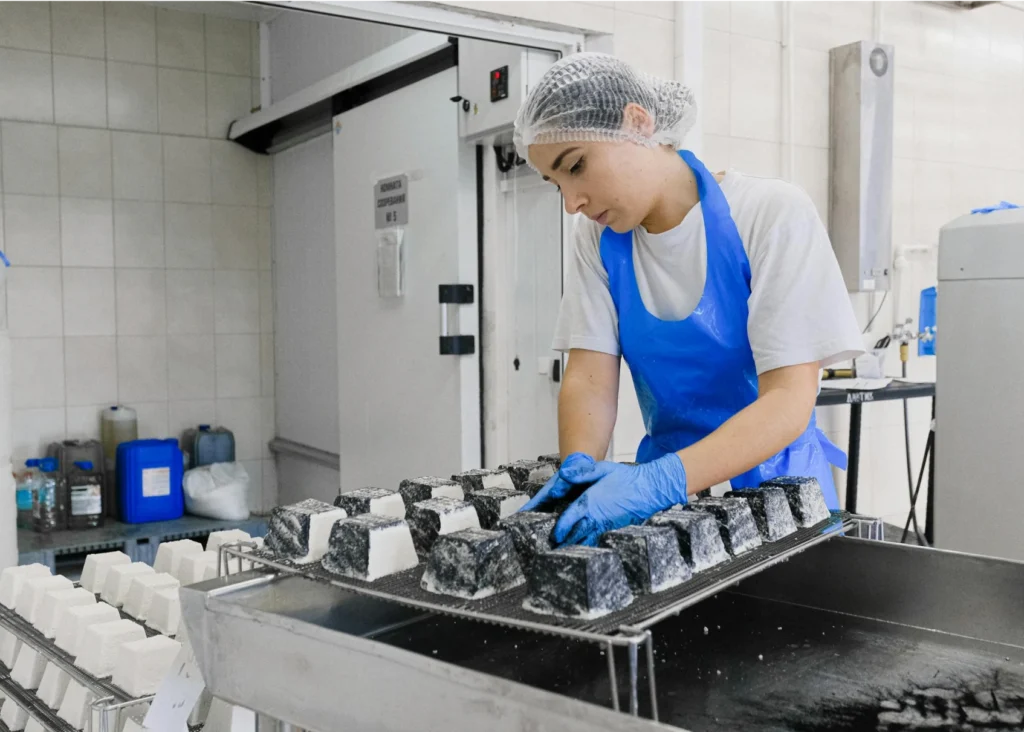

Food Processing as a Service
Food processing sector
As the primary provider of frozen vegetables in Southeast Europe, Barba Stathis operated within a conventional manufacturing framework with fixed production schedules and limited flexibility. The company faced difficulties in supply chain transparency, traceability, and real-time decision-making, while struggling with production hotspots identification and maintenance inefficiencies.
Context
Established in 1969, Barba Stathis S.A. operates as a subsidiary of Vivartia, the largest food company in Southeast Europe. It holds a prominent position as the primary provider of frozen vegetables in the region. The company’s activities include the production and sale of frozen vegetables (conventional and organic), mixed vegetables (plain and with rice or pasta), combinations of frozen vegetables based on traditional Greek recipes, fresh vegetable purees as well as tomato products, and fresh salads.
Its production is based on an integrated crop management system which ensures that the company produces vegetables of high quality and maximum safety, optimal nutritional value and outstanding flavour; vegetables as fresh as the moment of harvesting. The primary goal of this pilot is to minimise necessary investments, enhance facility utilisation, and decrease production downtime within the food industry, while promoting sustainability. The pilot will focus on exploring the dual nature of Manufacturing as a Service (MaaS) by examining both the MaaS consumer and provider perspectives, ultimately fostering enhanced integration throughout the value chain.
Before
Before MaaSAI: Overall, Barba Stathis operates within a conventional manufacturing framework, with fixed production schedules and limited flexibility. Specifically, from the MaaS consumer’s perspective, the current MaaS application presents certain gaps such as the automation and optimisation of the efficiency of the production line. The lack of advanced digital tools poses challenges regarding supply chain transparency, traceability, and real-time decision-making. Production hotspots and inefficiencies were challenging to identify promptly, resulting in potential delays, increased costs, and difficulties in responding to market dynamics.
Moreover, from the MaaS provider’s perspective, the lack of advanced digital tools such as predictive maintenance and digital twin technologies constrains the operational model of the company to a traditional manufacturing model.
This results in unplanned downtime, maintenance inefficiencies, and increased risks of equipment failures. The absence of real-time monitoring and predictive capabilities hindered the company’s ability to proactively address maintenance needs, contributing to resource waste and reducing the overall operational efficiency. The circularity of manufacturing practices is suboptimal, as equipment lifecycle management and resource utilisation are not fully optimised.
After
After MaaSAI: The integration of the MaaSAI System into the Barba Stathis operations aims to boost its competitiveness, automation, and sustainability. Barba Stathis will use the Cloud MaaS Marketplace (CMM), MaaS Collaboration Hub (MCH), Recommendation System (RS) and MaaS Dynamic Catalogue (MDC) to easily find partners in a MaaS ecosystem.
The MaaS Blockchain (MSB) will enhance transparency and traceability in Barba Stathis production lines, ensuring secure transactions and interoperable data exchange. Integration of real-time data and visual analytics through Remote Monitoring and Control (RMC), Control Panels (CP), and Data Analytics (DA) will pinpoint and address production inefficiencies, enabling rapid reconfiguration and upgrades.
Solutions like the MaaS Consumer Agent (MCA), MaaS Consumer Planner (MCP), and MaaS Supply Chain Simulator (SCS) will allow flexible, demand-driven production adjustments. From the provider’s perspective, the MaaS Provider Agent (MPA), MaaS Workspace Configurator (MWC), and MaaS Provider Planner (MPP) will open Barba Stathis’s equipment for rental, enhancing decentralised manufacturing and reducing downtime.
Digital Twins Designer (DTD) and Predictive Maintenance Toolkit (PMT) solutions will improve real-time monitoring, maintenance strategies, and operational reliability, positioning the company as a resilient, environmentally conscious player in the food industry.
Environmental impact assessments of value chains will be conducted using the LCA-LCC Toolkit (LCT) and Repair-Reuse-Recycle Toolkit (R3T), and the Digital Passport Designer (DIP) will be crucial for establishing the MaaS provider approach.
Expected improvements
Capacity allocation optimisation of the production system [KPI1] (+25%)
Total energy utilisation in production facilities [KPI3] (-5%)
Ratio of corrective maintenance activities to total maintenance operations [KPI4] (+3%)
Overall equipment effectiveness (OEE) ratio [KPI11] (+8%)
Ratio of unplanned production losses to total production time [KPI13] (+10%)
Ratio of product attributes quality [KPI15] (+8%)
Efficiency of resource utilisation in food processing operations [KPI18] (+15%)
Comprehensive measurement of greenhouse gas emissions in food processing operations [KPI19] (-20%)
Monitoring results of energy utilisation across all operations in the food
processing [KPI20] (-10%)

Smart Electronics
Manufacturing as a Service
Electronics manufacturing sector
As a young SME providing process automation and industrial machine retrofitting services, E4M faced the complexity of developing and implementing customized Industry 4.0 solutions. The conventional pathway of design, manufacture, testing, and deployment of multi-domain mechatronics devices remained an iterative, human-checking process that was prone to errors and inefficiencies.
Context
Engenharia Mecatrónica Lda is a young SME based in Guimarães (Portugal) established in 2021 whose founders are motivated to develop complete or integrated technological solutions, mainly customised for Industry 4.0. E4M provides services in process automation, retrofitting of industrial machines, and mechanical and electronic design, and provides support to their clients throughout all phases of the project, from prototyping, production, installation, maintenance and repair. Different sectors have different needs and requirements, challenging mechatronic or electronic implementation to be very specific to meet the required needs.
E4M offers electronics manufacturing and 3D prototyping services, allowing producers to add new features to their machines without the need to purchase new machines (which would be more expensive). E4M skills range from CAD design for printed circuit boards (PCBs) and 3D modelling, allowing faster production of unique parts to complete setup, deployment and start-up of the selected solution.
All E4M services are performed to respond to the needs requested by producers, ranging from the product development process, support for idealisation, concept validation, engineering and manufacturing, and finally lifetime support and updates. E4M aims to include AI in the solutions, for example, to optimise the design of PCBs and 3D modelling. E4M provides several services for different areas, such as automating personalised car and bus washing lines, where it designed and produced the controllers for data acquisition and actuation, and the software to monitor and control the machines via the web (Cloud).
Another example is the customisation of textile machines for automatic feeding and sorting (automatic control, mechanic and mechatronic design).
Before
Before MaaSAI: Despite multiple efforts from the community with several tools and standardised environments available to help the Industry4.0 product development, the conventional pathway of design, manufacture, testing and deployment of a multi-domain mechatronics device is still an iterative and human-checking process, and is error-prone.
Interoperability and early adoption of standards, both from the mechanical side and IT side, such as the Standard for the Exchange of Product model data (STEP) and the Object Linking and Embedding for Process Control – Unified Architecture (OPC-UA) and more recent tools related to Digital Twins are based on E4M’s offer to their digital technologies in the manufacturing servitisation process.
The level of integration depends on the client’s ambition. Still, the recent partnerships and use of interoperable manufacturing systems have contributed to the flexibility, agility and sustainability of the E4M engineering team to accomplish flexible products on demand with a high added value in the value chain, both by short downtime, upskilling traditional machinery (recycle or re-manufacture) or by proposing brand new manufacturing systems.
After
After MaaSAI: The integration of the MaaSAI System in E4M’s operations will enhance the development and acceleration of mechatronics/Industry 4.0 solutions. MaaSAI will aids in designing, collecting real-time data, building historical databases using the EDGE Data Storage (DS) and the Digital Industrial Passport Designer (DIP).
The Digital Twins Designer (DTD) enriches design libraries, speeding up solution development. Real-time monitoring of E4M products, using Control Panels (CP), and Data Analytics (DA), will ensure quality and timely problem-solving, reducing travel, costs, and downtime.
MaaS Consumer Agent and MaaS Provider Agent will orchestrate process and material flow, synchronising production and managing installation and maintenance. E4M’s new services will include Predictive Maintenance Toolkit (PMT) and Repair-Reuse-Recycle Toolkit (R3T) to offer maintenance and end-of-life options, considering economic and ecological factors.
The Cloud Maas Marketplace (CMM) enhances E4M’s visibility, attracting new customers and streamlining service contracting through Smart Contracts Toolkit (SCT) and MaaS Collaboration Hub (MCH), improving decision-making and efficiency in problem resolution.
Expected improvements
Increase manufacturing time availability by 10% [KPI2] (+10%)
Increase Mean Time Before Failure (MTBF) after datalog monitoring [KPI4] (+10%)
Increase engineering solutions to reduce MTBF [KPI9] (+20%)
Decrease repair time with MaaS Solutions [KPI10] (-10%)
Increase of the production flow efficiency with the MaaS System application [KPI18] (+20%)
Engineering devices has less greenhouse gas emissions [KPI19] (-15%)
Decrease in energy consumption of the equipments remanufatured [KPI20] (-15%)
Decrease waste generation avoiding discarted equipment through remanufacturing [KPI21] (-25%)
Rate of product remanufacturing [KPI23] (+25%)